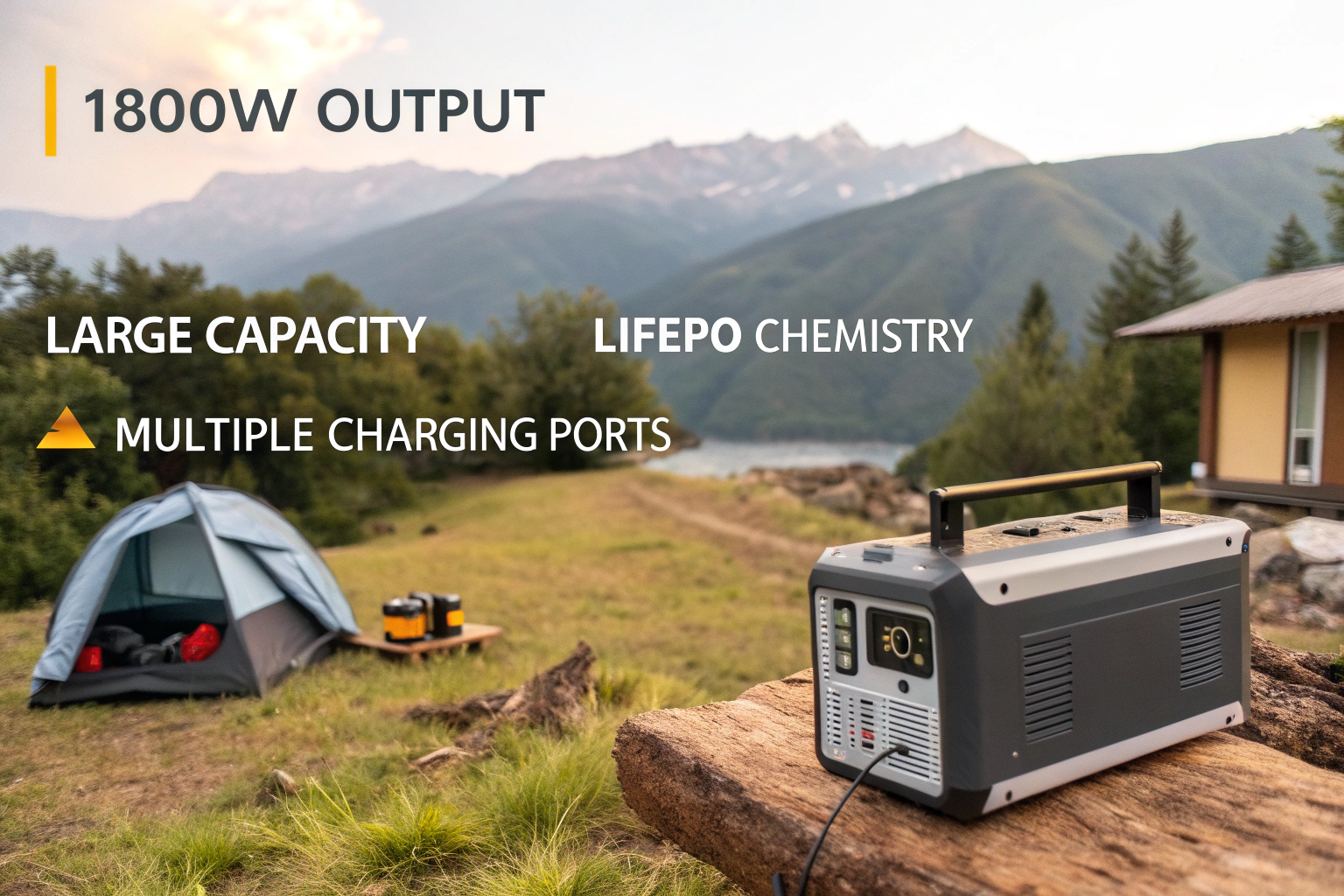
You need power on the move, but with so many options—solar, batteries, fuel generators—how do you choose what’s best?
The right power source for a portable setup depends on your energy needs, environment, and usage time—most users choose lithium battery-based portable power stations for balance and flexibility.
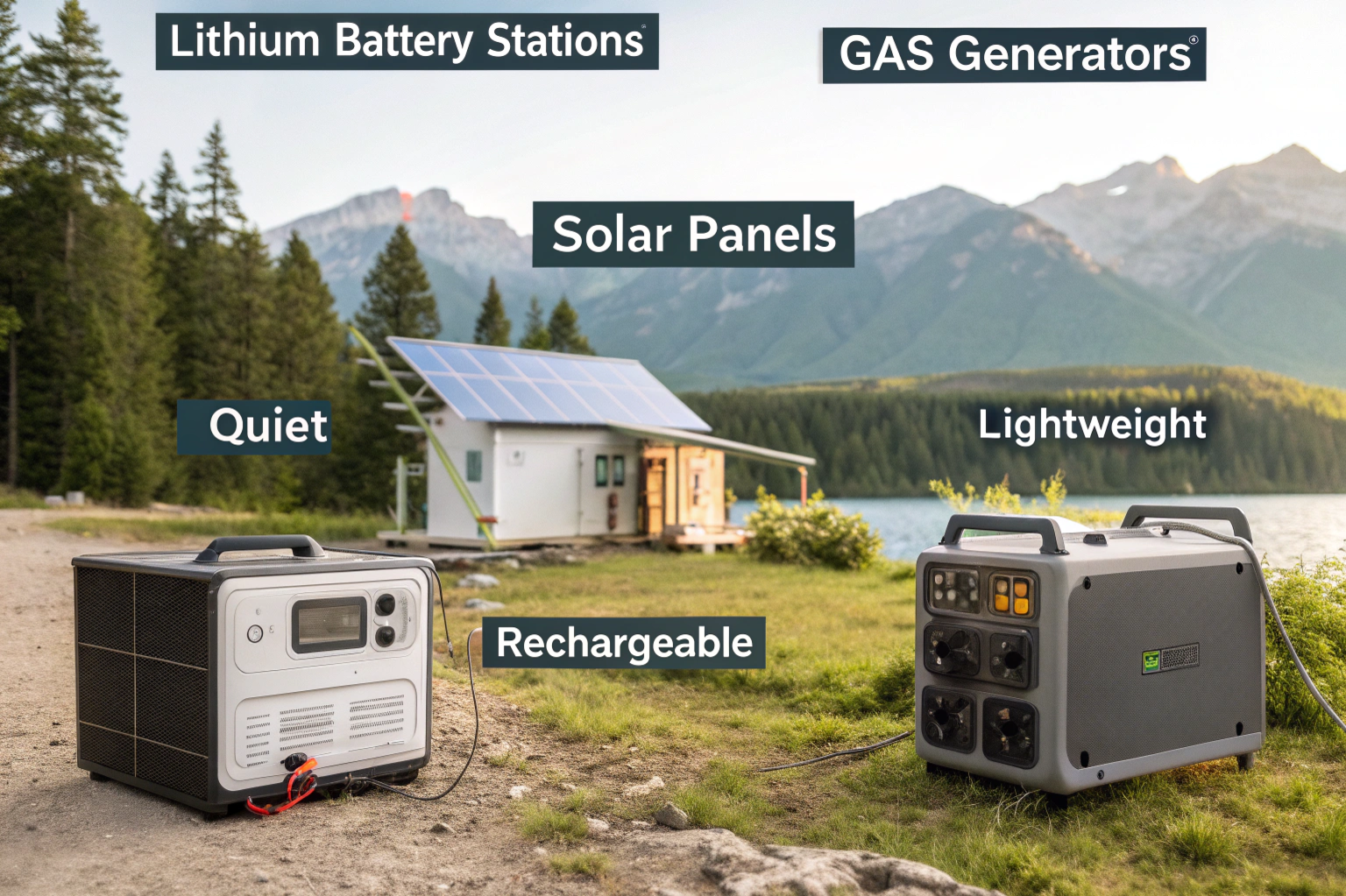
Whether you're camping, working off-grid, or preparing for emergencies, choosing the right power system can make or break your experience. Let’s walk through the real-world choices and how to match them with your goals.
What Types of Power Sources Are Available for Portable Use?
When it comes to portable setups, there’s no one-size-fits-all solution—each type has trade-offs.
The most common portable power sources are lithium battery stations, foldable solar panels, fuel generators, and vehicle-based inverters—each serves a different purpose.
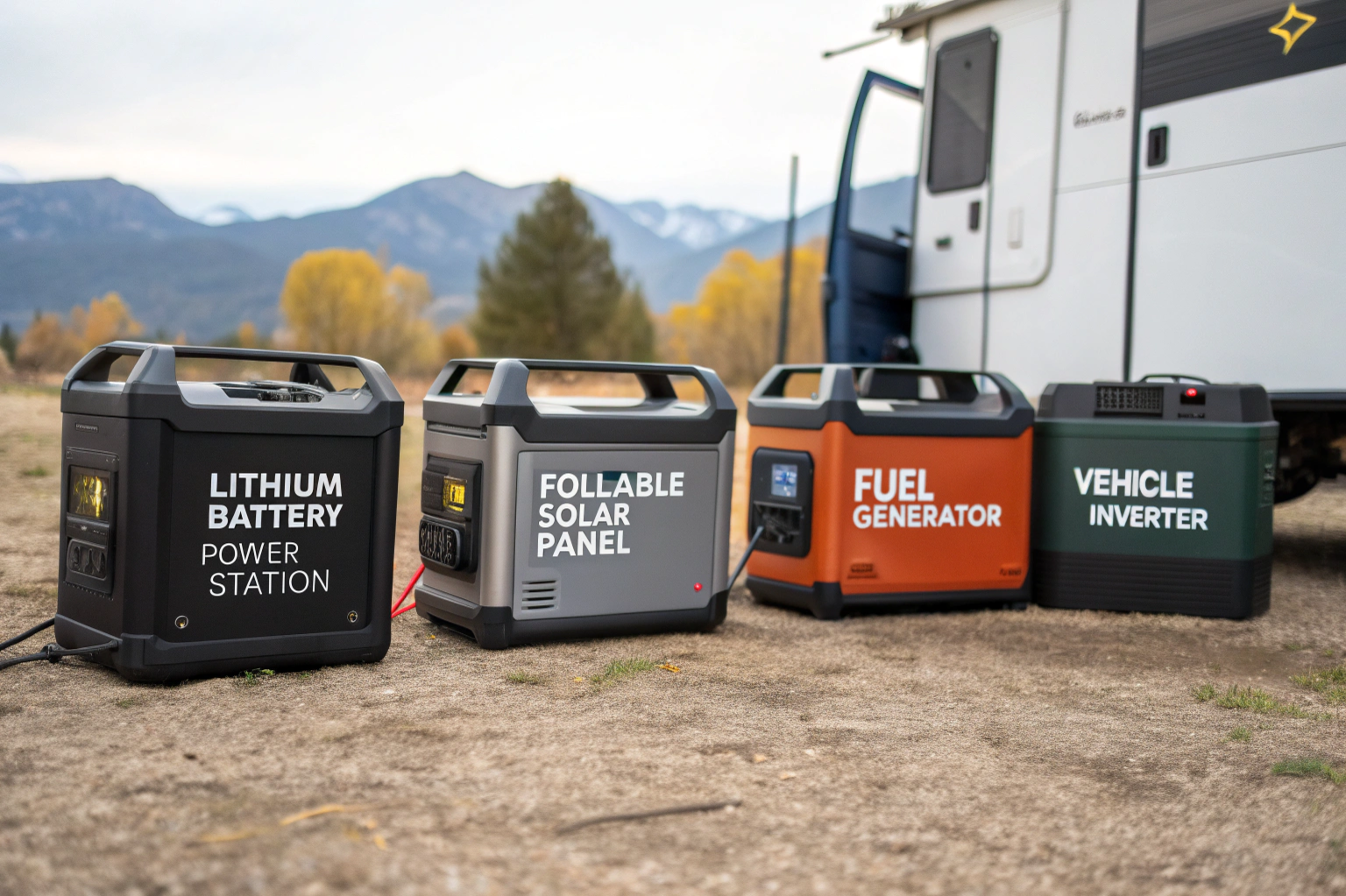
Here’s how they compare at a glance:
| Power Source | Output Type | Pros | Cons |
|---|---|---|---|
| Lithium Power Station | AC/DC/USB | Quiet, clean, safe | Higher upfront cost |
| Foldable Solar Panel | DC (solar input) | Renewable, lightweight | Depends on sunlight |
| Gas/Diesel Generator | AC | High power, long runtime | Noisy, fuel needed, fumes |
| Vehicle Inverter | AC from car | Low cost, simple setup | Limited by car battery size |
From my experience, most modern users go for a combination: a lithium battery power station + solar for daytime charging. It’s silent, reliable, and doesn’t rely on fuel.
Is a Lithium Battery Power Station Enough?
You might wonder if one box can really power everything you need for a full trip or power outage.
Yes, a good lithium battery station can handle phones, laptops, fans, lights, CPAPs, and even mini fridges—especially if paired with solar to recharge.
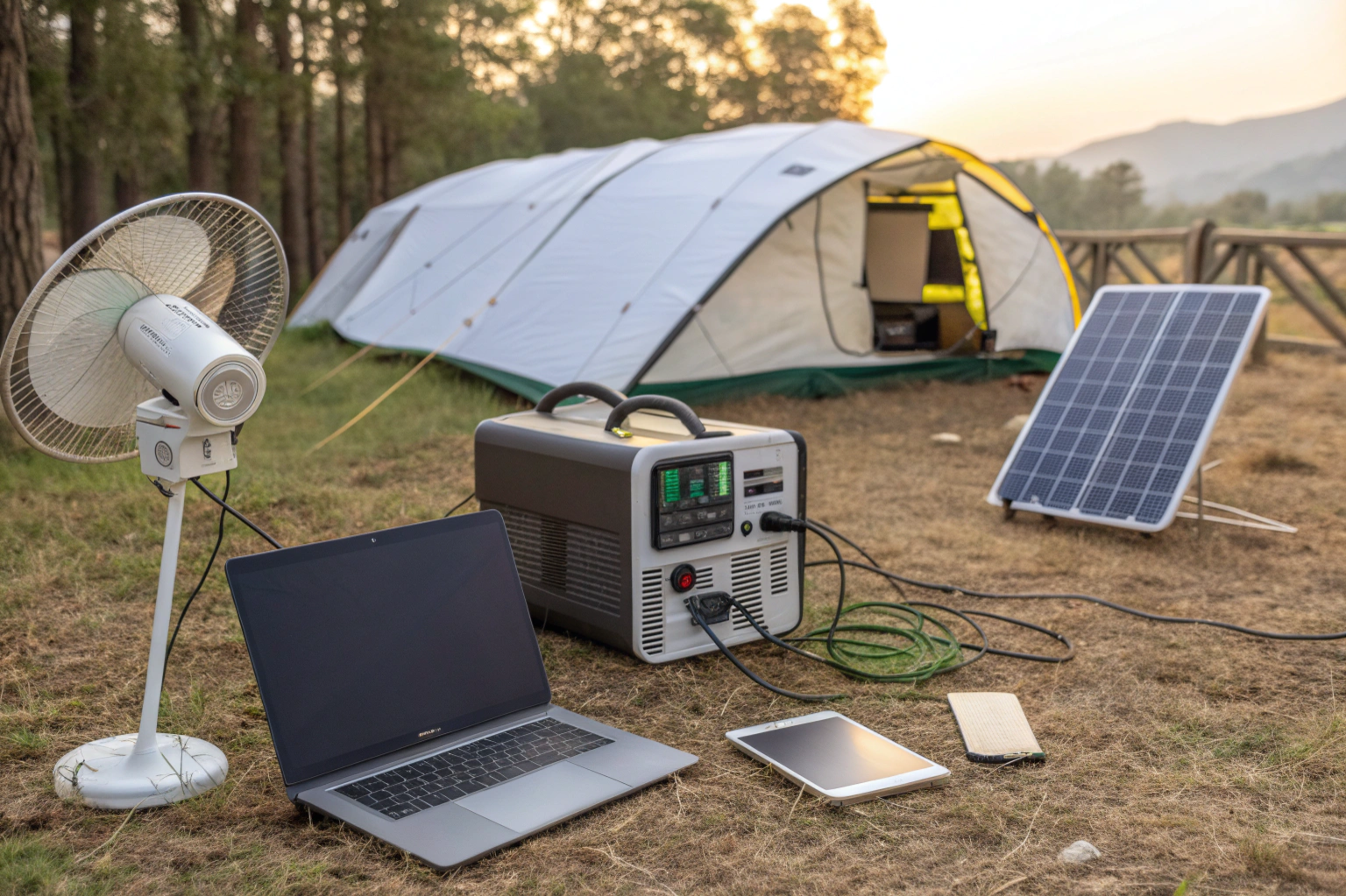
Power stations rated 500–2000Wh are common for portable use. Here’s a rough idea of what you can power:
| Device | Power Need (W) | Runtime on 1000Wh Station |
|---|---|---|
| Smartphone | 5W | 200+ charges |
| Laptop | 60W | ~15 hours |
| LED Lights (x3) | 30W | ~30 hours |
| Mini Fridge | 65W | ~14 hours |
| CPAP Machine | 40W | 20–25 hours |
So for weekend trips or emergency use, a mid-size station covers essential gear. For longer or heavier loads, look for 1500–3000Wh models.
Should I Add Solar Panels to the Setup?
No plug nearby? Then you’re going to need sunlight.
Solar panels are a great way to keep your portable power station charged, especially for camping or off-grid work—but only if sunlight is available.
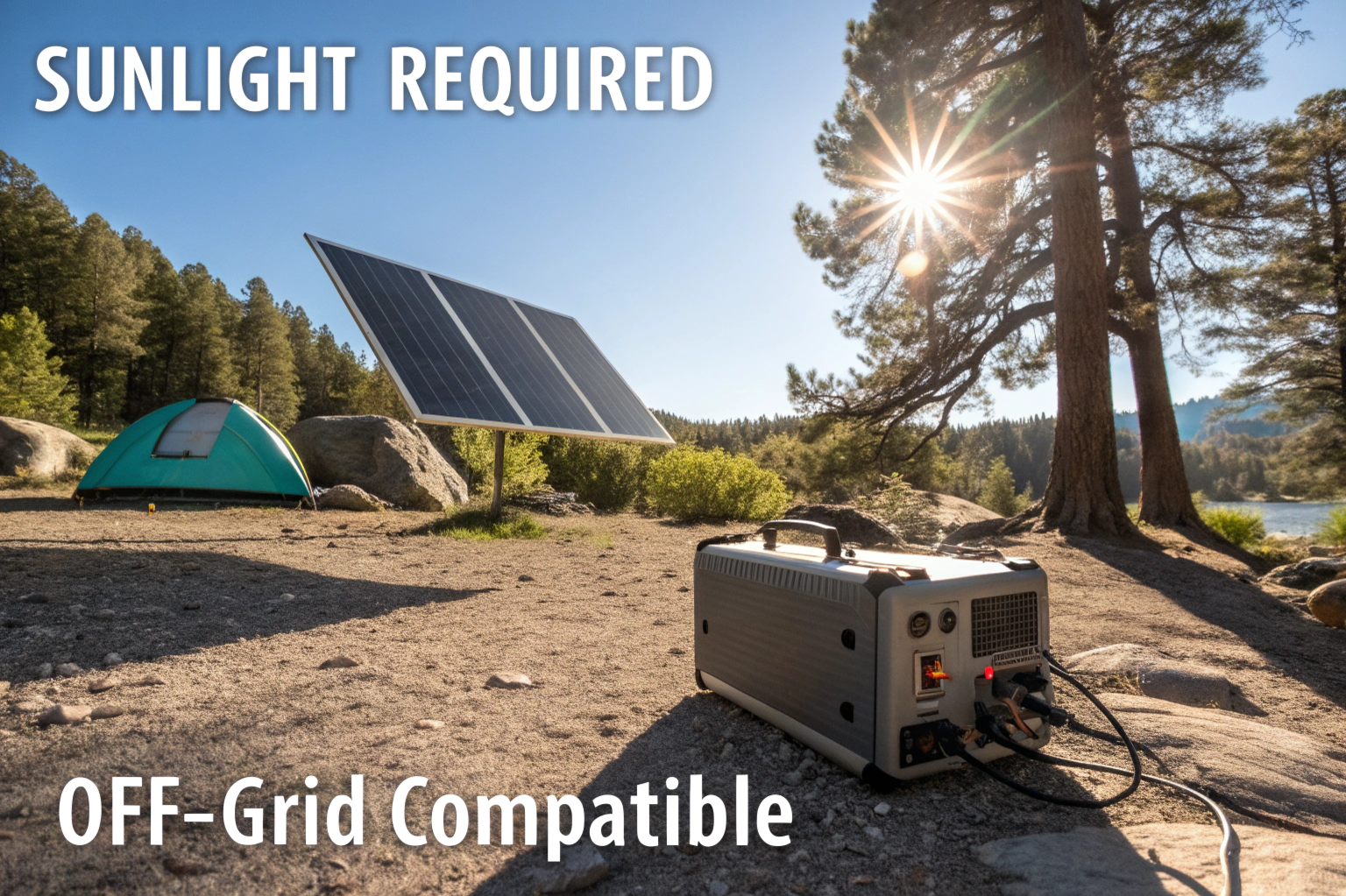
A 100–200W foldable solar panel can recharge a mid-size station in 6–10 hours of full sun. But weather, angle, and cable length all affect output. I always advise:
- Use parallel panels for faster charging
- Get a station with MPPT controller for better efficiency
- Keep panels cool and angled for best results
If you’re staying more than one night outdoors or want total independence, solar is worth it.
What About Gas Generators—Do They Still Have a Role?
Sometimes you need raw power for tools or long runtimes. Is gas still an option?
Yes, fuel generators still work well for high-demand tools or when sunlight isn’t reliable—but they’re loud, require fuel, and are banned in some parks.
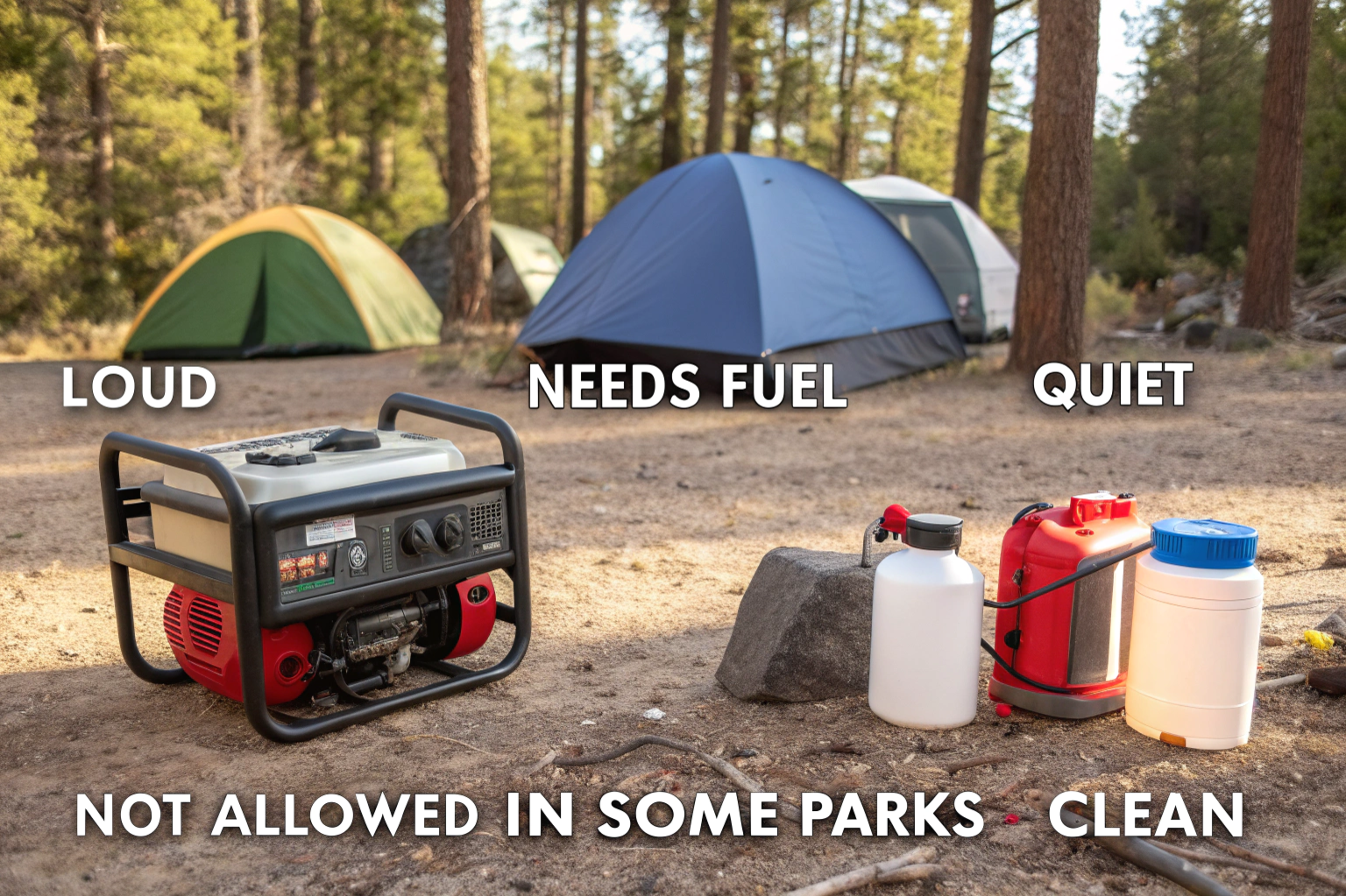
For off-grid construction or running large appliances like AC units, fuel generators make sense. But for portable setups focused on convenience and silence, they’re often overkill.
Here’s when I’ve used both:
- Battery + solar for camping, outdoor filming, emergency backup
- Fuel generator when running power tools all day or charging multiple devices in cloudy areas
Still, fuel noise and fumes often make them the last resort rather than the go-to.
How Do I Choose the Right Setup for My Situation?
It’s not just about power—it’s about your goals, location, and needs.
To choose the right portable power source, match your power needs, trip duration, and available sunlight with the right battery and charging method.
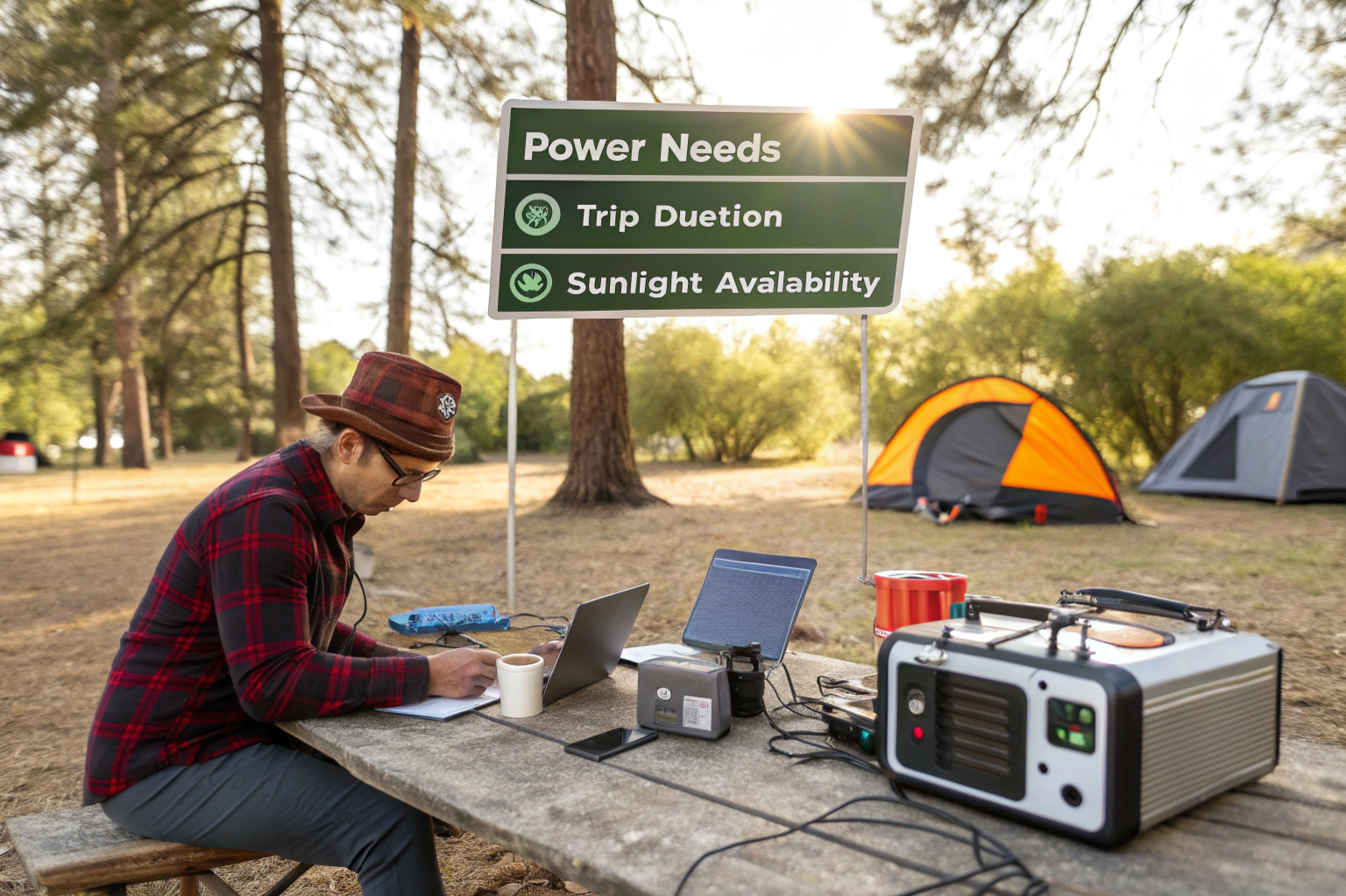
Ask yourself:
- How many watts will I use at once?
- How many watt-hours do I need daily?
- Will I have sunlight for solar charging?
- Will I be near a vehicle or wall outlet?
- Do I want something quiet and safe indoors?
| Situation | Best Setup |
|---|---|
| 2-day camping trip | 500–1000Wh battery + 100W solar |
| Home blackout backup | 1500–3000Wh battery + solar input |
| Remote job site (power tools) | Fuel generator + battery station |
| Overland or van life | 1000Wh LiFePO₄ + rooftop solar |
By combining a reliable lithium battery station with the right accessories, you can build a lightweight and effective mobile energy system that lasts for years.
Conclusion
The right power source for a portable setup depends on your energy needs and environment. For most users, lithium battery stations—especially paired with solar—offer the best balance of reliability, safety, and ease of use.