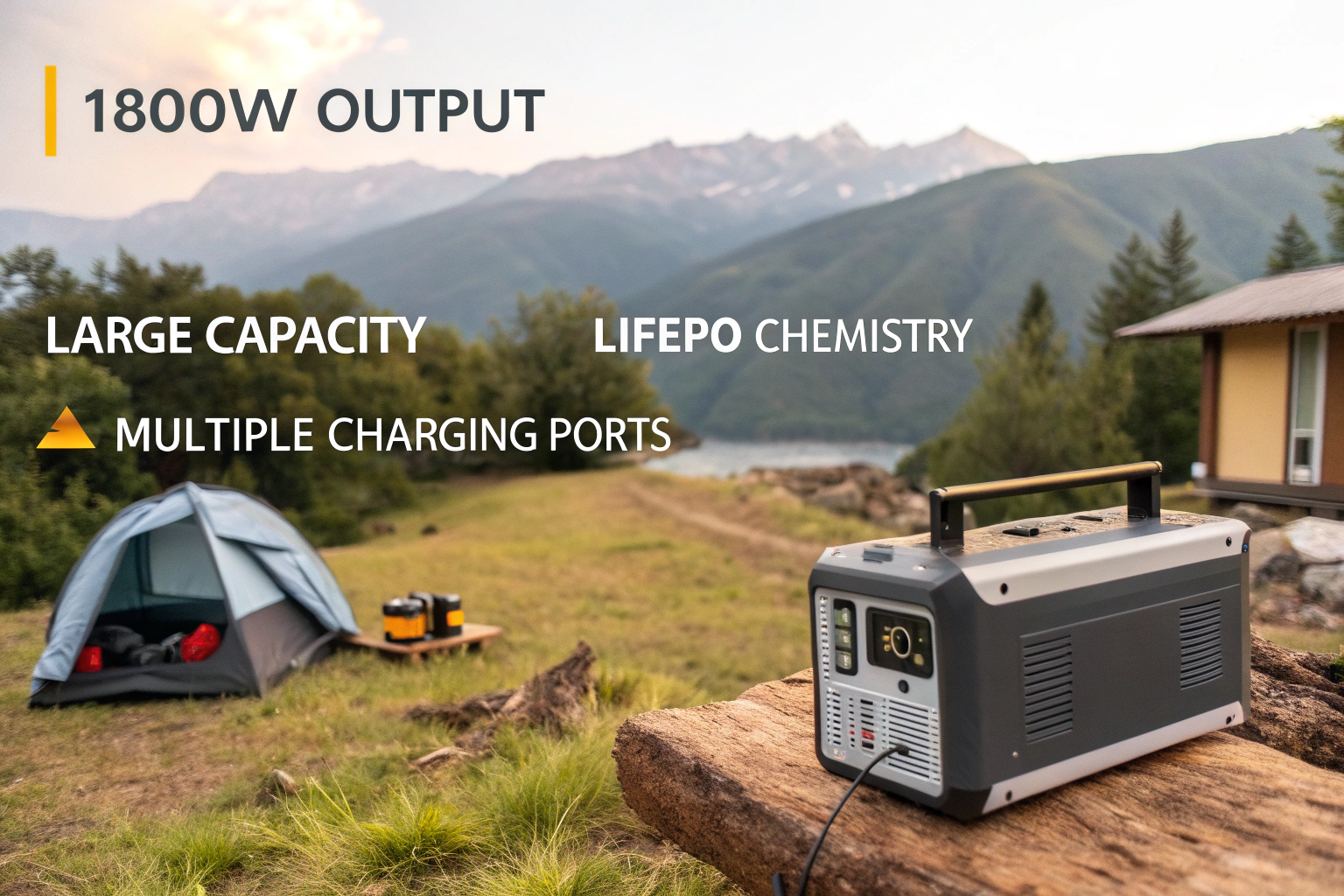
You're using solar to charge your LiFePO₄ battery, but how long will it actually take—and what affects the charging time?
The time it takes to charge a LiFePO₄ battery with solar depends on the battery capacity, solar panel wattage, sun conditions, and charge controller efficiency—typically 4 to 10 hours.

Whether you’re powering a home, RV, or portable setup, knowing how long your solar charging will take helps you plan better—and avoid running out of power when you need it most.
What Factors Affect Charging Time?
Charging a battery sounds simple, but multiple elements influence the speed.
Charging time is determined by the battery’s size (Wh), the power output of your solar panel (W), sunlight quality, and how efficient your MPPT or PWM charge controller is.
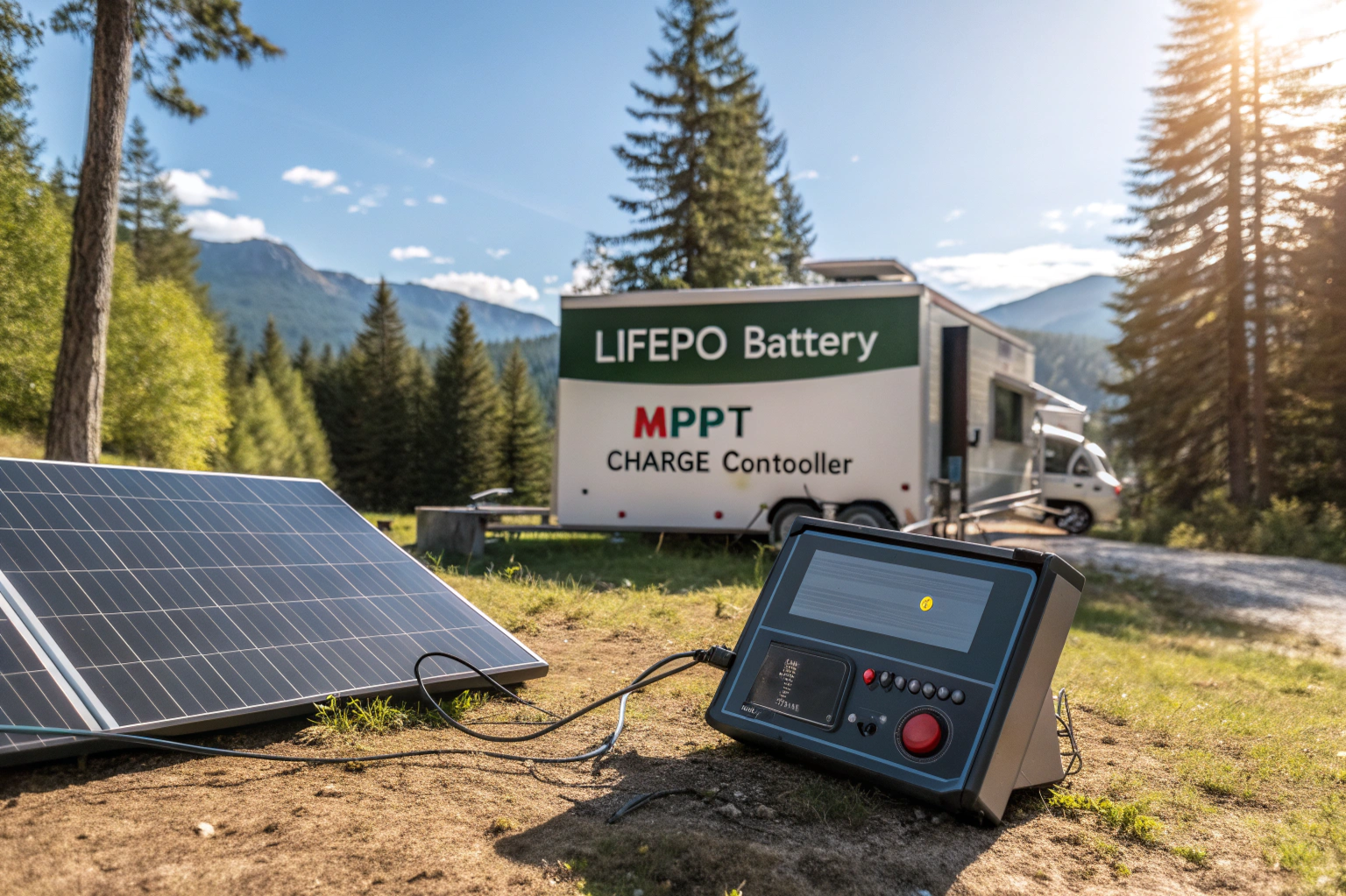
Here’s the simple formula to estimate charging time:
Charging Time (hrs) = Battery Capacity (Wh) ÷ (Solar Panel Output (W) × Efficiency)
Let’s say:
- Battery = 100Ah LiFePO₄ at 12.8V → 1280Wh
- Solar Panel = 200W
- MPPT Controller = 95% efficient
- Sunlight = 5 peak sun hours/day
Estimated Time: 1280Wh ÷ (200W × 0.95) ≈ 6.7 hours
| Factor | Description | Impact Level |
|---|---|---|
| Battery Capacity | Bigger = longer charge time | High |
| Solar Panel Wattage | More watts = faster charging | High |
| Sun Hours | More sun = more daily charge | Medium |
| Charge Controller Type | MPPT is faster than PWM | High |
| Temperature/Weather | Clouds reduce solar efficiency | Medium |
From my experience, upgrading from a 100W to a 200W panel can cut charge time in half—especially useful on short winter days.
How Long to Charge Common Battery Sizes?
You may already have a specific battery and panel setup in mind. So here’s how long typical LiFePO₄ batteries take with popular solar panel sizes.
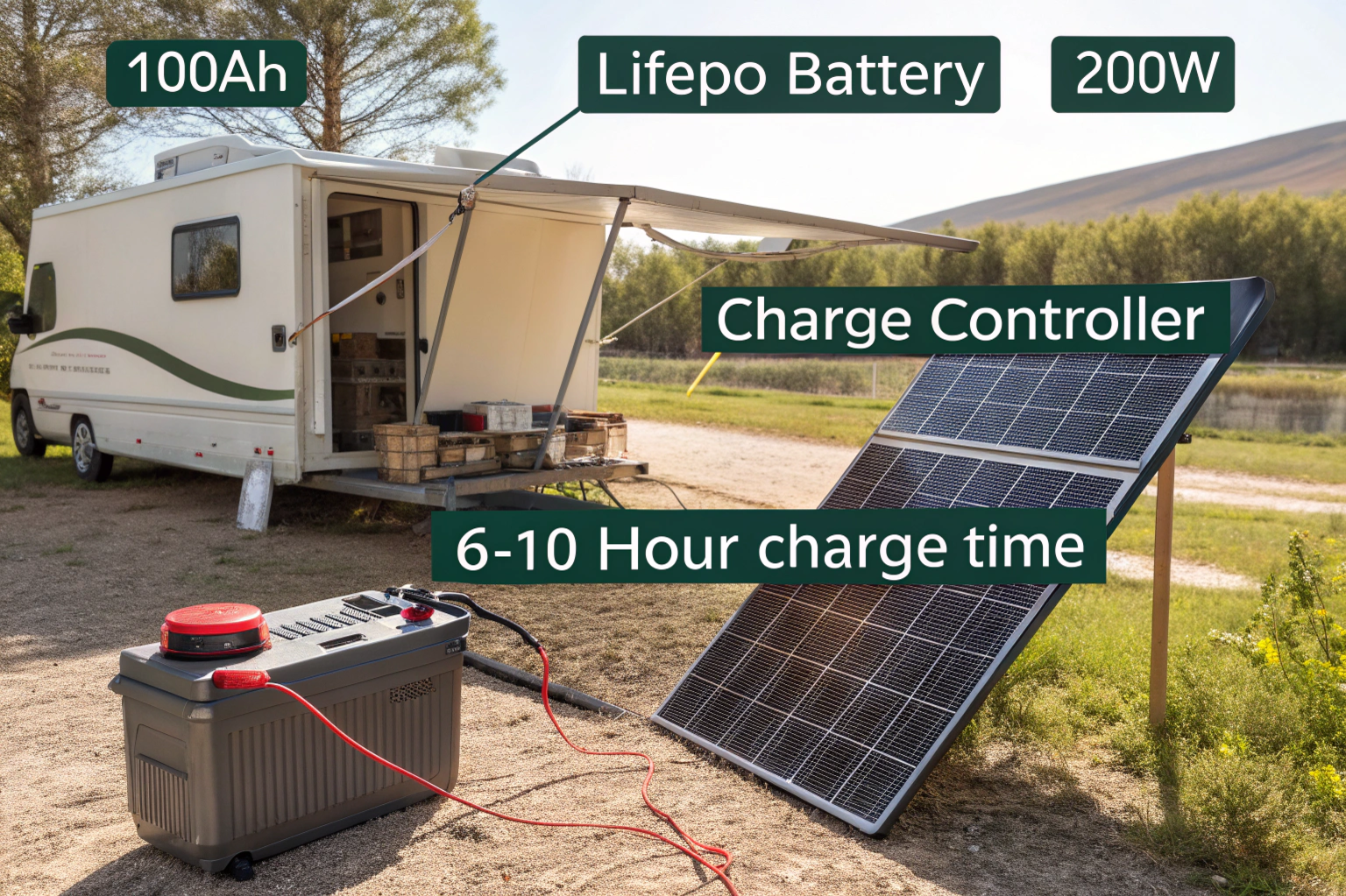
A 100Ah LiFePO₄ battery takes about 6–10 hours to charge with 200W solar, depending on sun and charge efficiency.
| Battery Size | Solar Panel Size | Sun Hours (avg) | Charge Time Estimate |
|---|---|---|---|
| 50Ah (640Wh) | 100W | 5–6 hrs/day | 6.7–8 hours |
| 100Ah (1280Wh) | 200W | 5–6 hrs/day | 6–9 hours |
| 200Ah (2560Wh) | 400W | 5–6 hrs/day | 6–10 hours |
| 280Ah (3584Wh) | 600W | 5–6 hrs/day | 6–10+ hours |
Of course, if you live in a cloudy area or it’s winter, expect slower charging. I always suggest oversizing your solar array if charging speed is critical.
Does the Charge Controller Type Make a Difference?
Not all solar systems are built equally—your controller plays a key role.
MPPT charge controllers are more efficient than PWM, often charging 20–30% faster by maximizing solar input voltage.
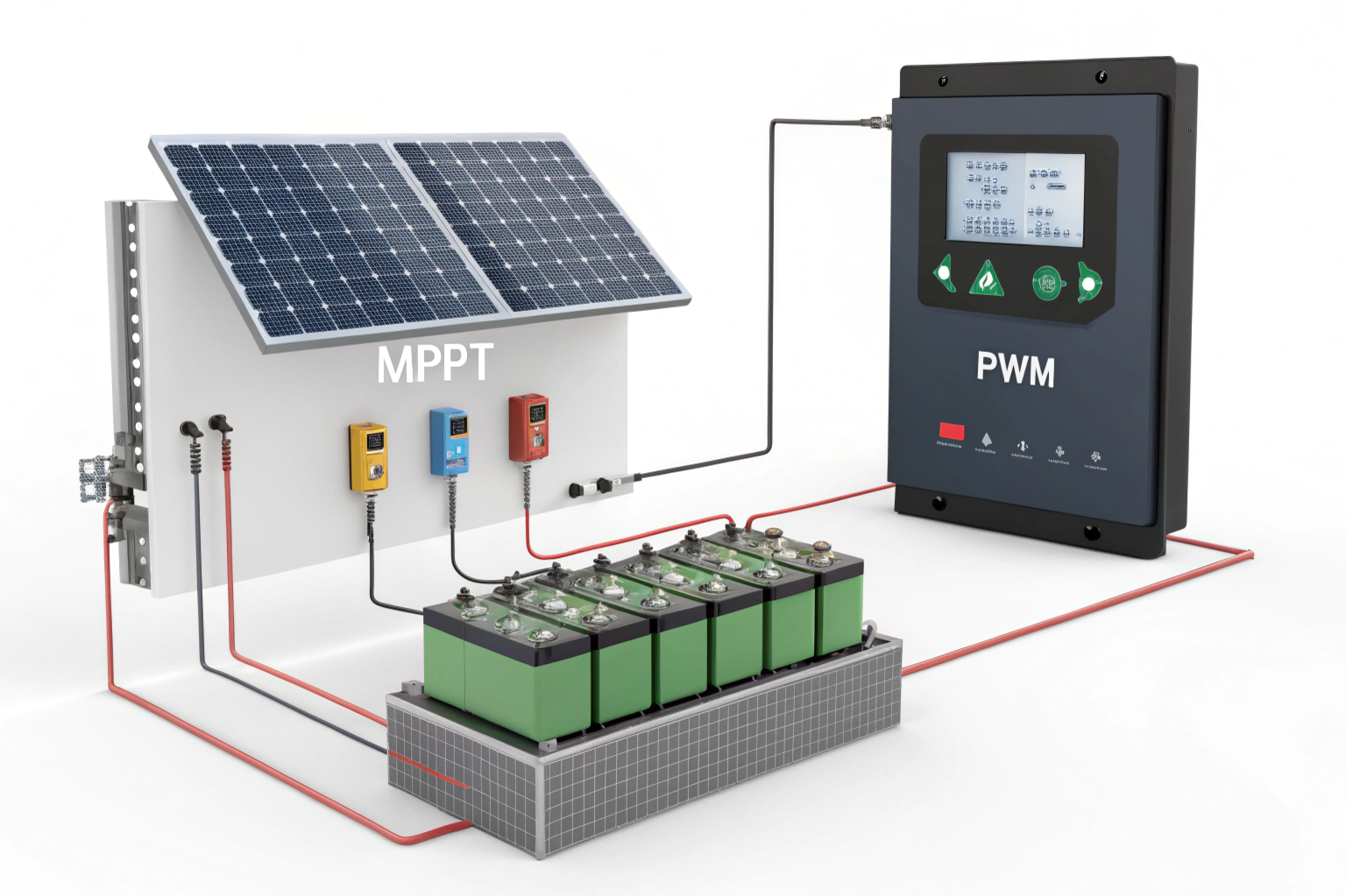
Here’s the difference:
- PWM (Pulse Width Modulation): Works best when panel voltage matches battery voltage
- MPPT (Maximum Power Point Tracking): Adjusts input voltage for max efficiency
| Controller Type | Efficiency | Cost | Ideal Use |
|---|---|---|---|
| PWM | 70–80% | Lower | Small systems, low voltage |
| MPPT | 90–98% | Higher | Large or high-voltage systems |
For my solar builds, I always choose MPPT. The extra cost pays off quickly in better performance—especially in changing weather or low sun angles.
Can You Charge Faster with More Panels?
Yes, and it’s one of the easiest upgrades you can make.
Adding more solar panels (up to the controller’s input limit) speeds up charging, especially if you're working with limited sun hours.
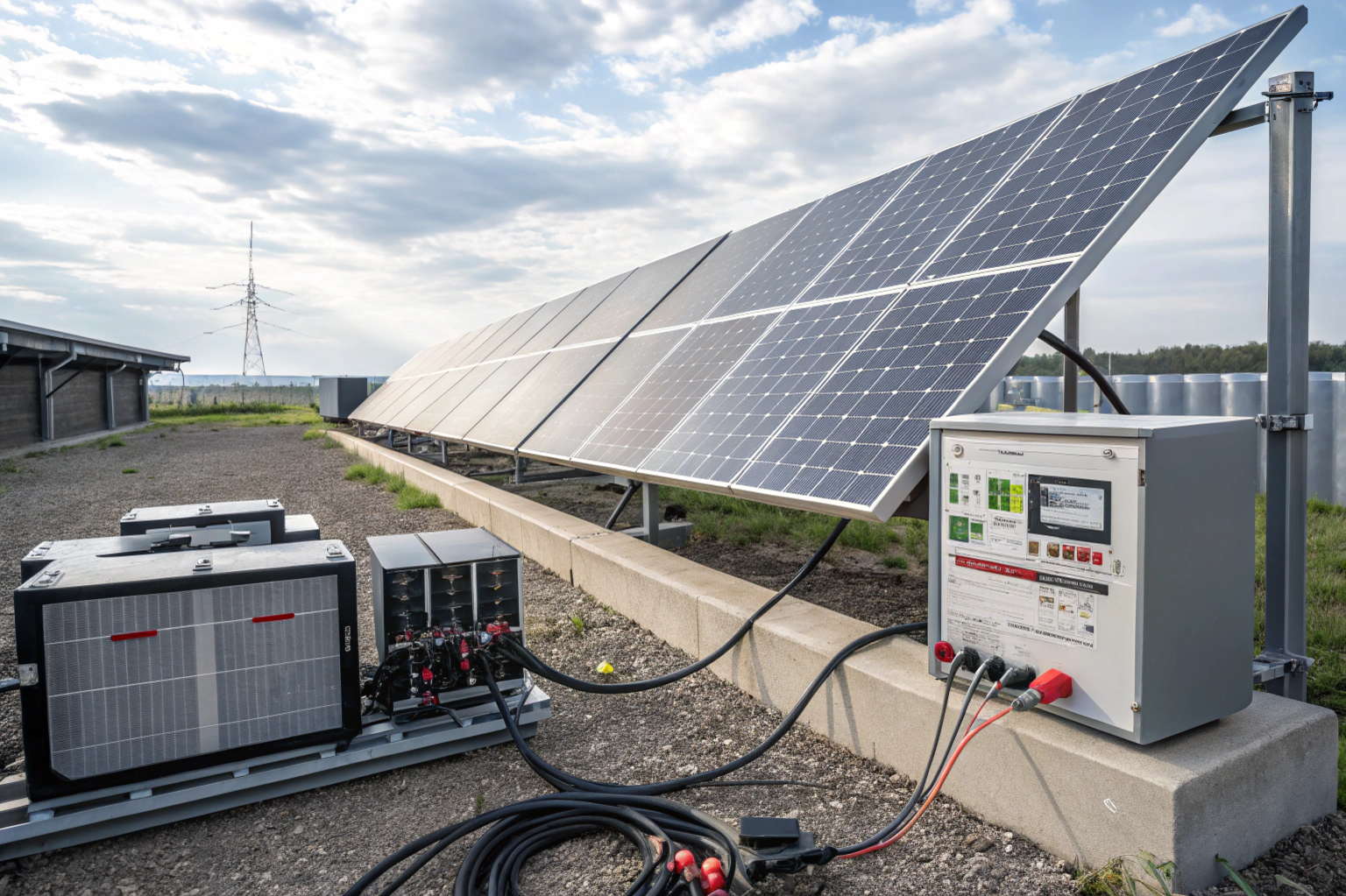
You can wire multiple panels in series or parallel depending on voltage and amperage needs. Just make sure:
- Your charge controller supports the total panel wattage
- You stay within the voltage/current input limits
- Your battery doesn’t overheat during fast charging
In my setups, I’ve paired 2–3 panels to fully charge 100Ah batteries in under 5 hours. It’s a major help during trips or during emergency power recovery.
What If It’s Cloudy or Winter?
Not every day is perfect for solar charging—but that doesn’t mean you’re stuck.
On cloudy days or in winter, solar output drops, so expect slower charging—use more panels or partial charging strategies to adapt.
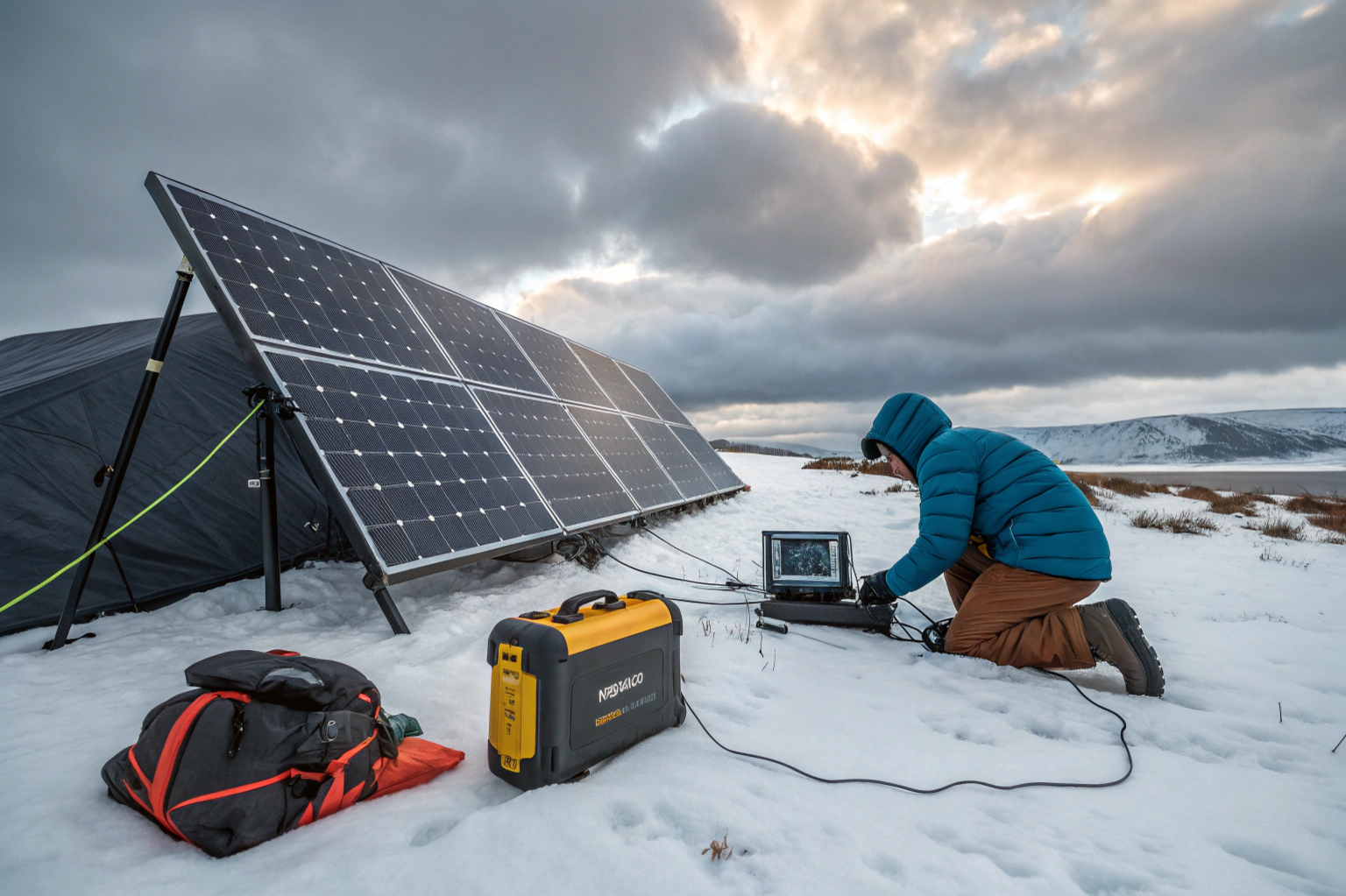
Solar panels still produce power on cloudy days—just less of it. Efficiency can drop to 10–30% of rated output. In these conditions, I:
- Use higher-wattage arrays to compensate
- Charge only to 80% if time is tight
- Supplement with AC charging if available
| Weather Condition | Expected Output vs Sunny Day |
|---|---|
| Full Sun | 100% |
| Partly Cloudy | 60–80% |
| Overcast | 20–50% |
| Rainy | 10–30% |
| Winter Low Sun | 30–60% |
The key is flexibility. LiFePO₄ handles partial charges well—so even a little sun is enough to keep your setup running.
Conclusion
Charging a LiFePO₄ battery with solar power typically takes 4 to 10 hours, depending on battery size, panel wattage, sun conditions, and charge controller efficiency. With the right setup, you can power your system quickly—even off-grid or during emergencies.