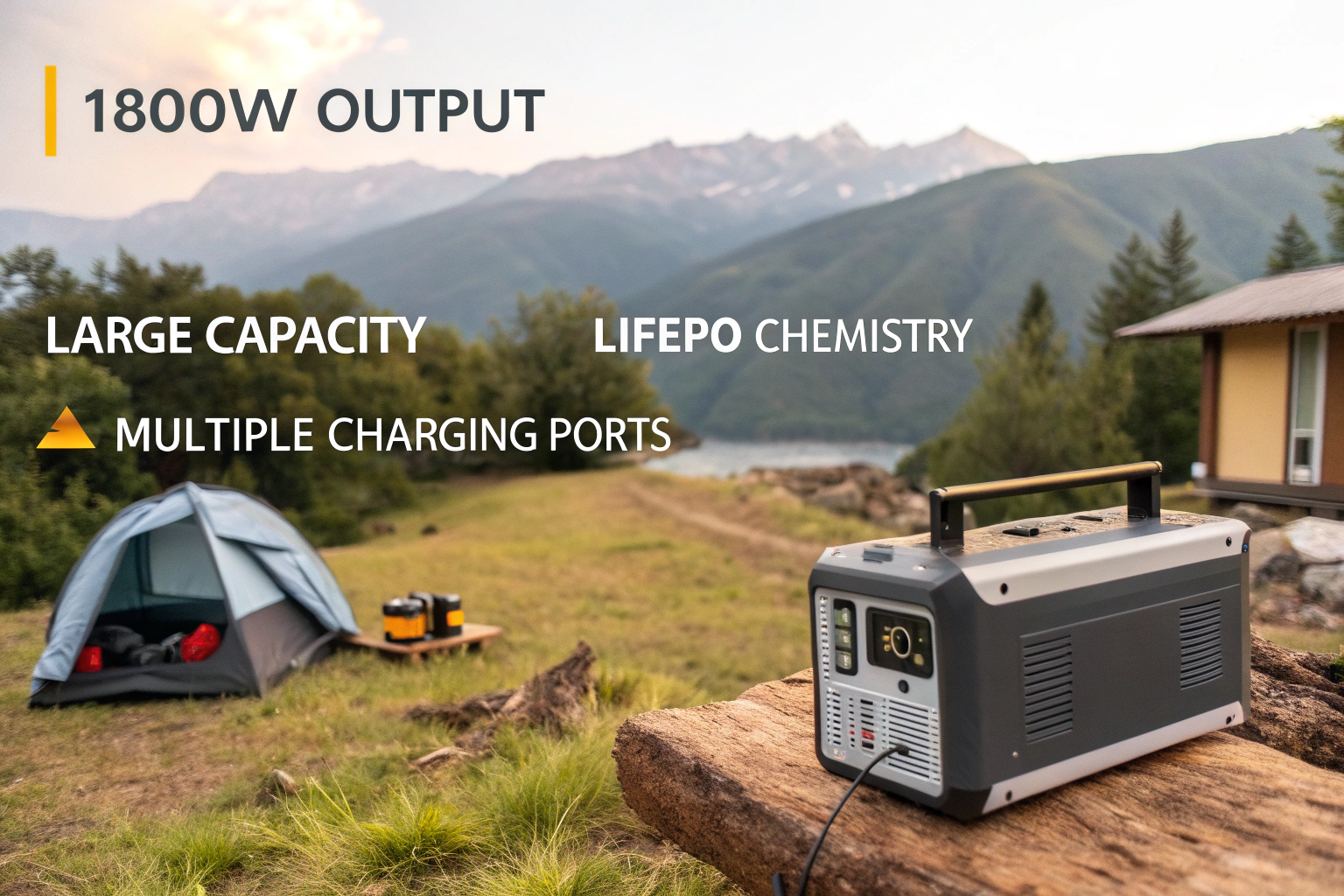
Sunlight might be free, but heat is not your power station’s friend—high temperatures can silently shorten its life.
No, it’s not recommended to leave your portable power station in a hot environment for extended periods. Heat can damage the battery, reduce lifespan, and pose safety risks.
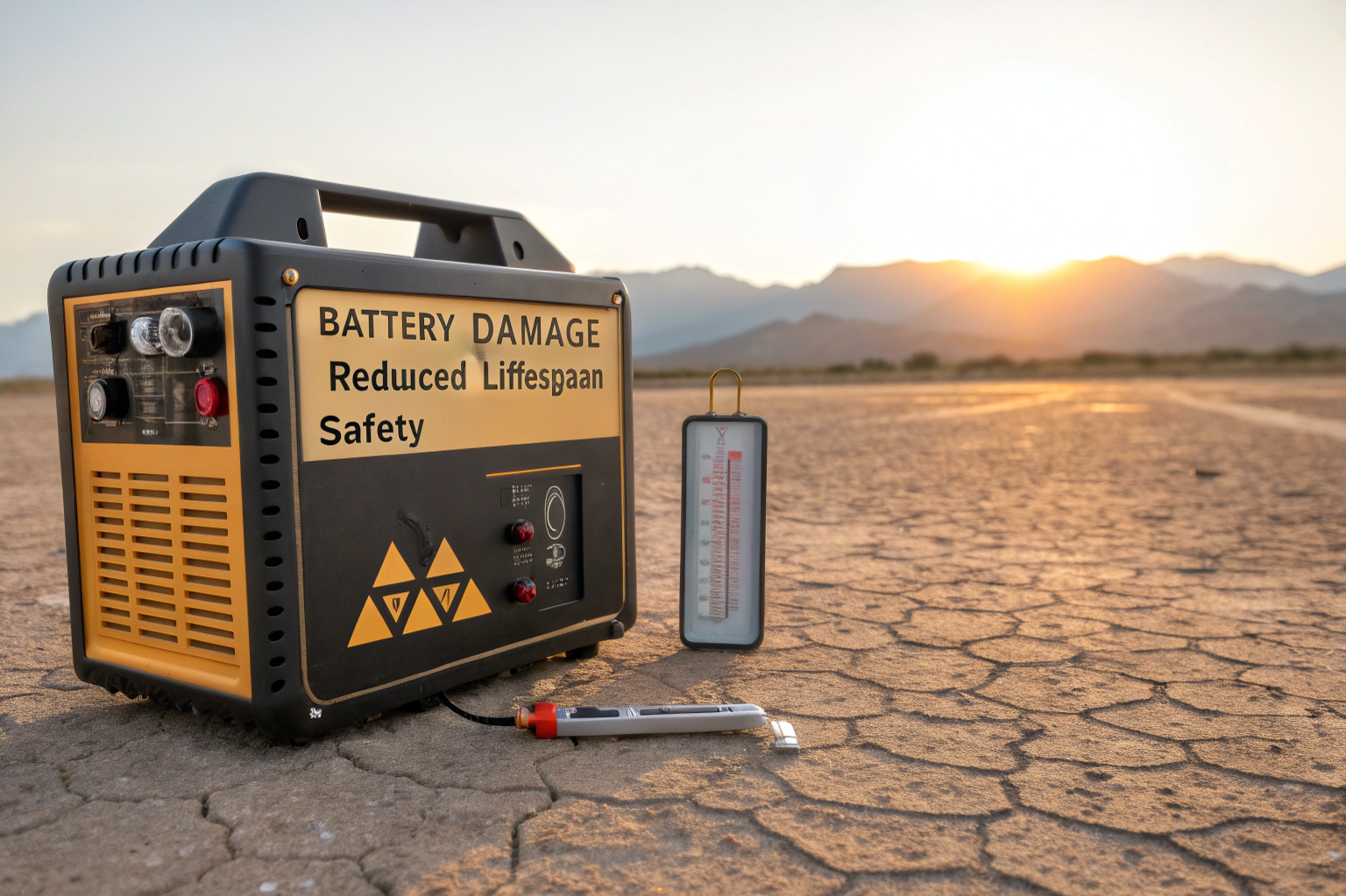
Whether you keep your station in a car, garage, or tent, it’s important to understand how heat affects performance, safety, and long-term durability. Let’s look at how to store and use your device smartly—especially when temperatures rise.
What Happens When a Power Station Gets Too Hot?
You might not notice it right away, but high heat slowly wears down what’s inside your battery.
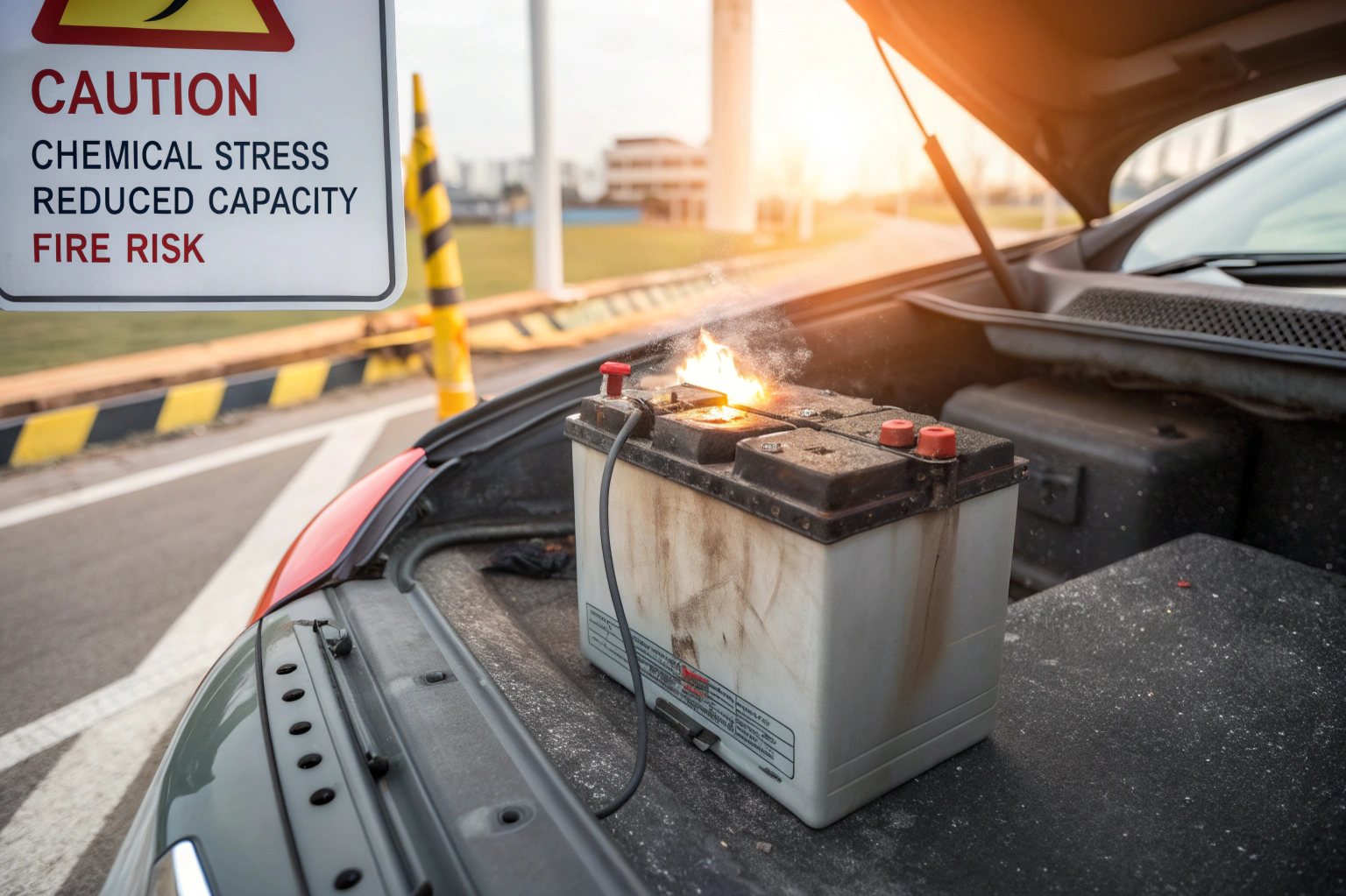
Excessive heat causes chemical stress inside lithium batteries, leading to faster degradation, swelling, reduced capacity, or even fire in extreme cases.
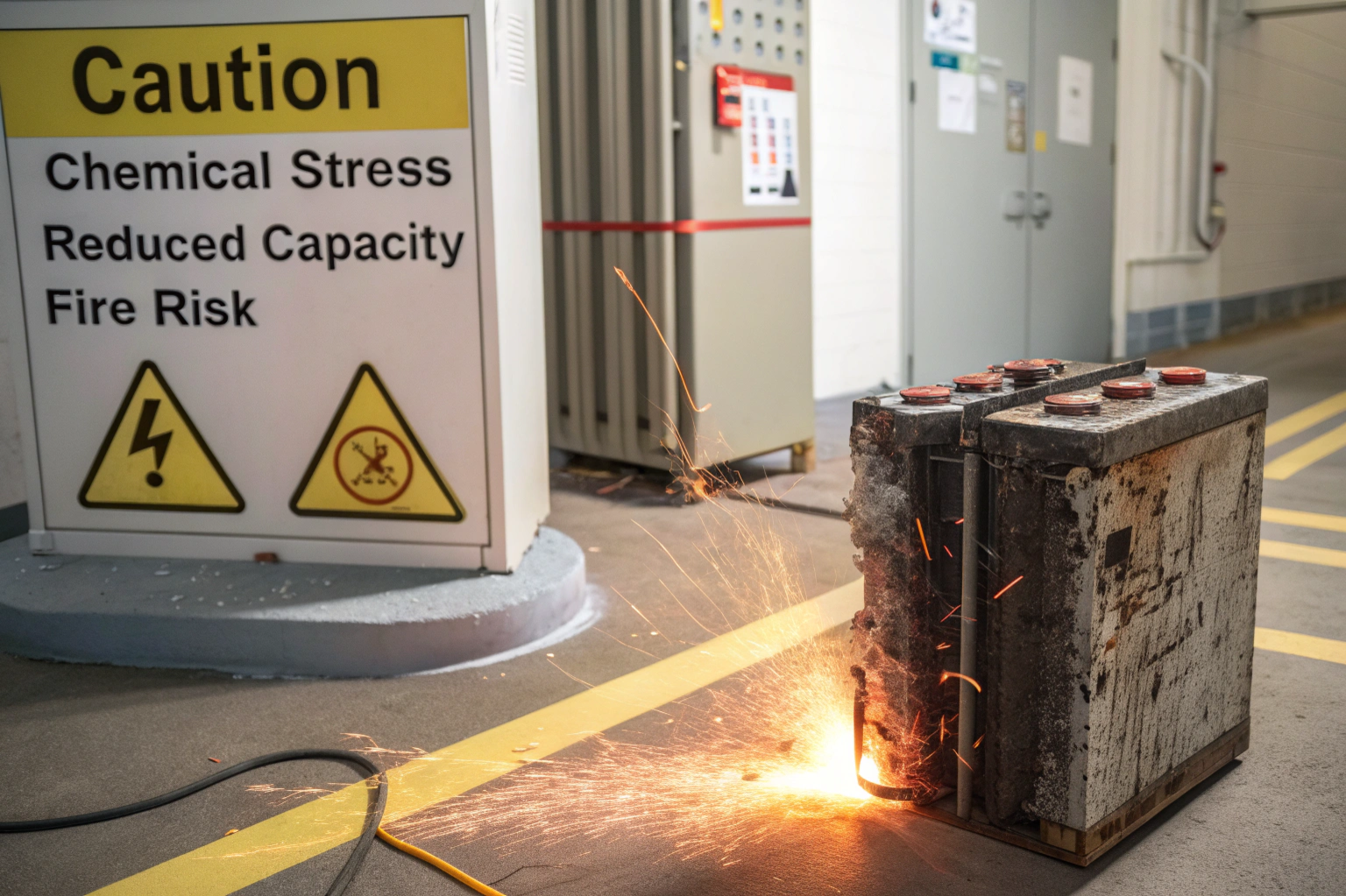
Most portable power stations use lithium-ion or LiFePO₄ batteries. Both types have safe operating ranges, but when internal temperatures go above 60°C (140°F), damage begins. Here’s what I’ve seen over time:
- Battery ages faster – capacity drops with each overheat event
- Built-in protection kicks in – device may shut down to prevent fire
- Plastic casing can deform – especially if left in direct sunlight
- Components weaken – like inverters or displays
| Temperature Range | Risk Level | Result |
|---|---|---|
| 0–40°C (32–104°F) | Safe | Normal use |
| 40–60°C (104–140°F) | Moderate | Shorter battery life |
| 60°C+ (140°F+) | Dangerous | Fire risk, battery failure |
If you’ve ever left your unit in a hot car during summer, you’ve probably already reduced its battery lifespan without knowing it.
Can LiFePO₄ Batteries Handle Heat Better Than Other Types?
You might hear that LiFePO₄ batteries are tougher—but does that mean they’re heatproof?
Yes, LiFePO₄ batteries are more heat-resistant than traditional lithium-ion, but they still degrade when exposed to extreme temperatures for long periods.
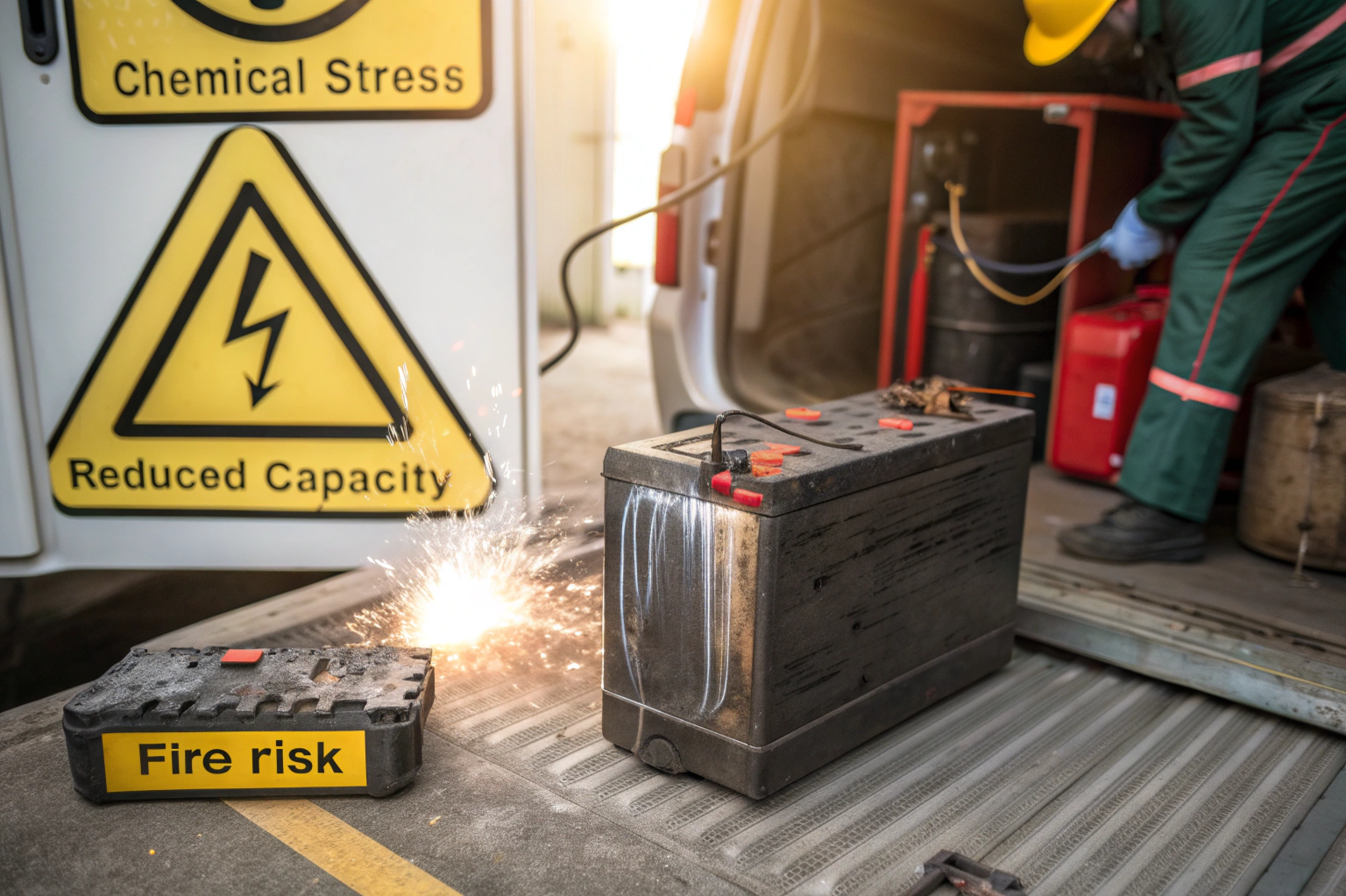
LiFePO₄ batteries have better thermal stability. They won’t catch fire as easily and they can tolerate short bursts of higher heat. But that doesn’t mean you should keep them in a hot van or sunny garage all summer.
| Battery Type | Max Operating Temp | Fire Risk | Cycle Durability in Heat |
|---|---|---|---|
| LiFePO₄ | ~60°C | Very Low | High |
| Lithium NMC | ~45°C | Moderate | Medium |
| Lead-Acid | ~40°C | Low | Low |
When I’ve used LiFePO₄ in outdoor solar kits, they survived heatwaves—but only because I shaded and vented the units well.
What Are the Best Ways to Protect My Power Station from Heat?
Knowing the risks is one thing. Acting on them saves your investment.
Keep your portable power station in shaded, ventilated, and insulated locations during hot weather to extend battery life and prevent overheating.
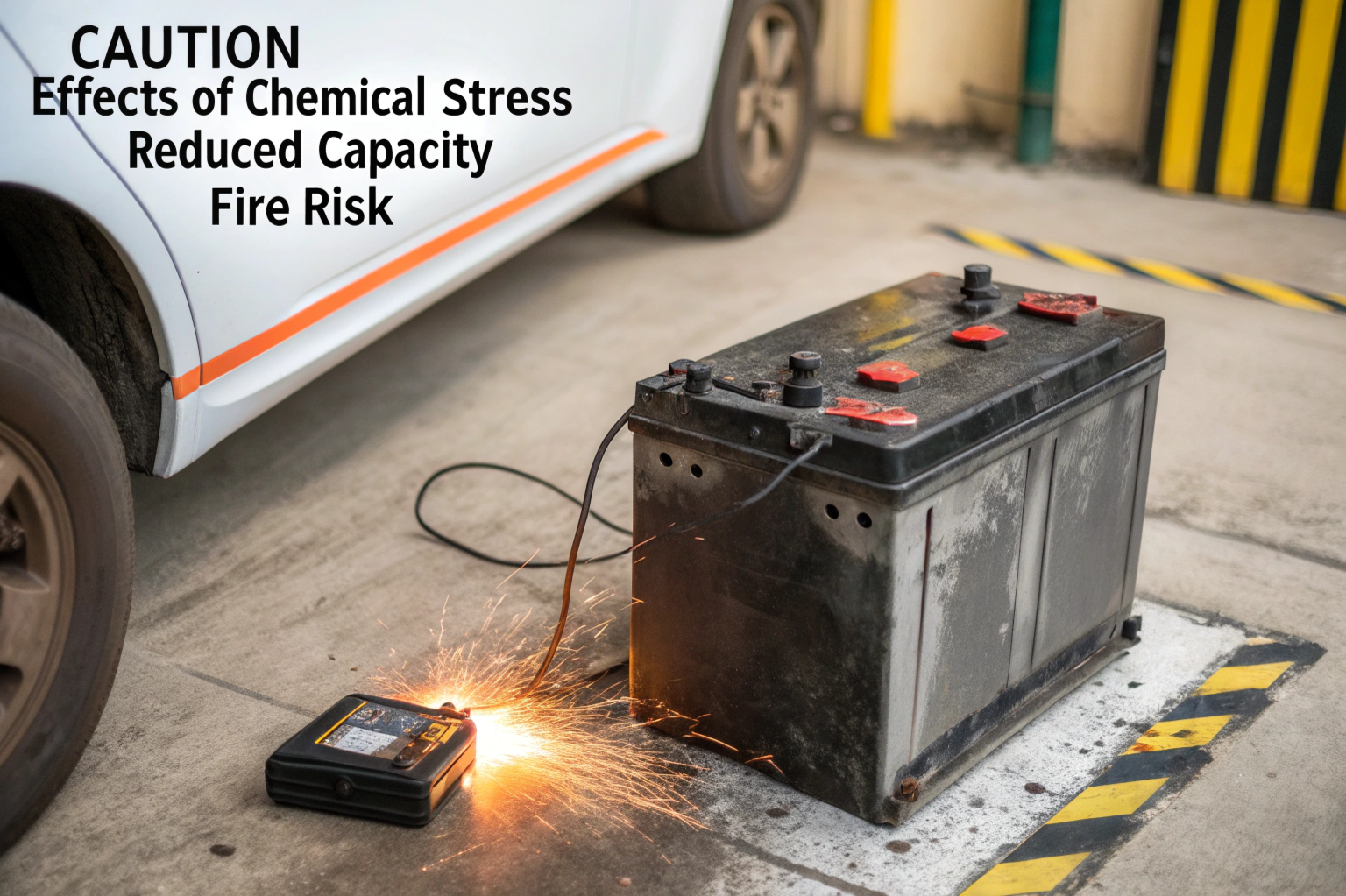
Here’s what works best in real-world conditions:
- Never leave it in direct sunlight – even inside a tent or vehicle
- Use reflective or insulated covers – helps deflect heat
- Elevate it off the ground – heat radiates upward from concrete
- Ventilate if indoors – fans or natural airflow help
- Avoid charging at peak heat – wait until evening or early morning
For example, when camping in the desert, I kept my station under a tarp, with a reflective heat shield and airflow gap underneath. It stayed cool even while charging from solar.
What If I Accidentally Left It in a Hot Car?
It happens. You left it in the trunk on a 35°C day and forgot. So now what?
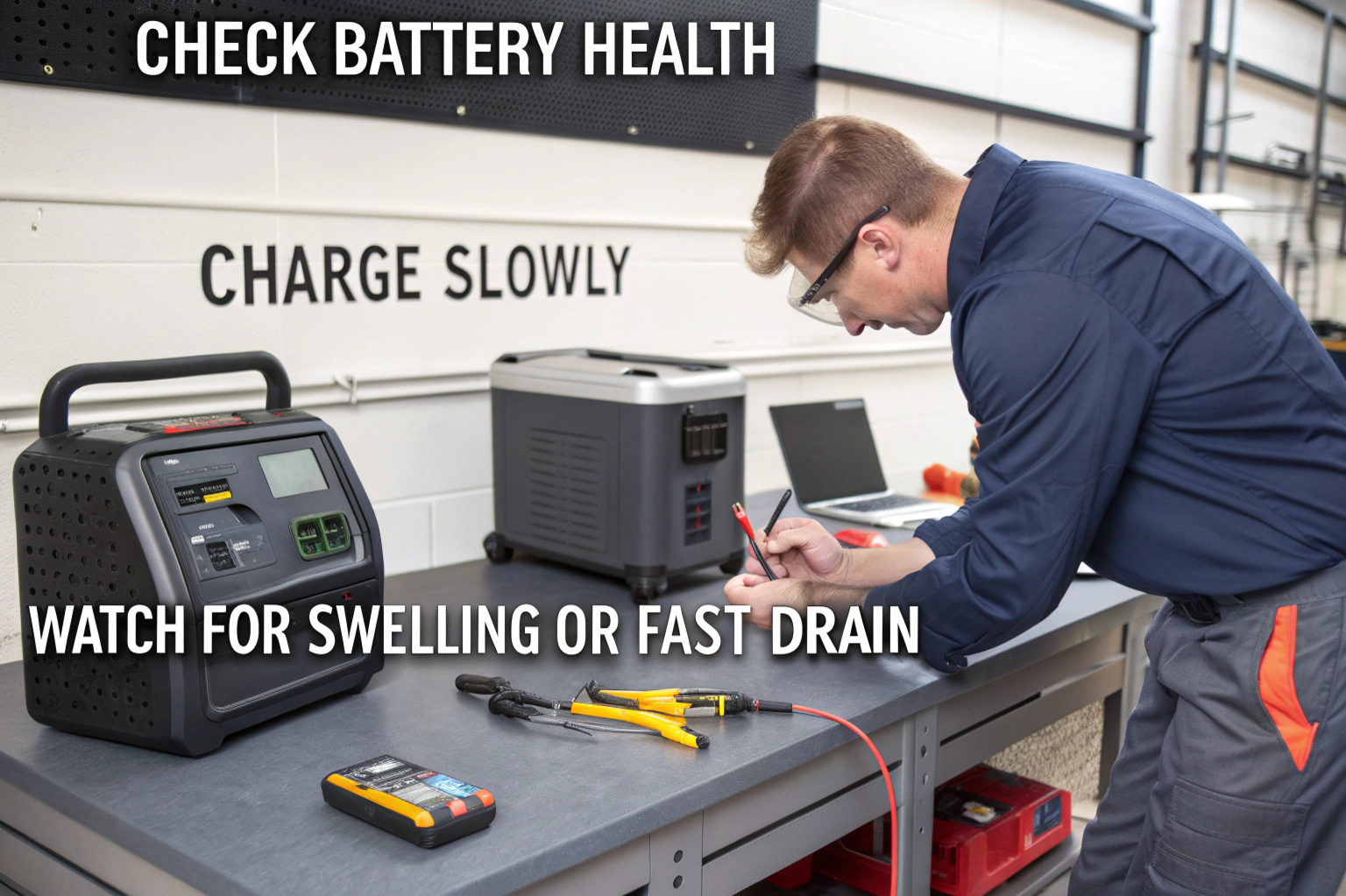
If your power station has been overheated, check the battery health, charge slowly, and monitor for unusual signs like swelling or rapid discharge.
Here’s what I always do:
- Let the unit cool naturally in a shaded area before turning it on
- Avoid charging immediately—let internal temps normalize first
- Check for warping, swelling, or odd smells
- Run only low-power devices at first to test output stability
- If it behaves abnormally—don’t use it. Contact the manufacturer
Some power stations have built-in BMS (Battery Management Systems) that stop charging or discharging when too hot. But not all budget models include this.
Is It Safe to Charge a Power Station in Hot Weather?
Even if storage is shaded, what about charging while it’s hot outside?
Avoid charging your power station during extreme heat, especially in direct sunlight, as high internal temperatures can damage the battery.
Solar charging seems harmless, but panels heat up fast. If your unit sits right behind them, it soaks up both heat and power—which isn’t ideal.
Here’s what I do:
- Charge early morning or late afternoon, not mid-day
- Place the station away from panels, in a shaded ventilated box
- Use long cables to keep charging station cool
- Monitor temperature if your unit has a display or app
In my experience, performance improves and battery life lasts longer when I avoid peak-heat charging cycles.
Conclusion
You should never leave your portable power station in a hot environment for long. Even heat-resistant models like LiFePO₄ degrade faster under constant heat. For safety and long life, keep it cool, shaded, and charged when temperatures are lower.