Choosing the Right Solar Panel Configuration: Series vs. Parallel
When connecting solar panels, selecting the appropriate configuration is crucial, with two common options being series and parallel connections. Understanding the characteristics of these configurations can help you make an informed decision based on your specific energy needs.
Series Configuration
In a series configuration, multiple solar panels are connected in sequence, significantly increasing the system's output voltage. For example, if you connect three panels, each with an output voltage of 18V, the total output voltage will reach 54V. It's important to note that the current (in amperes) remains constant in this setup, meaning the maximum output current is determined by the weakest panel. This configuration is typically suitable for applications that require higher voltages, such as long-distance power transmission or high-voltage devices.
Parallel Configuration
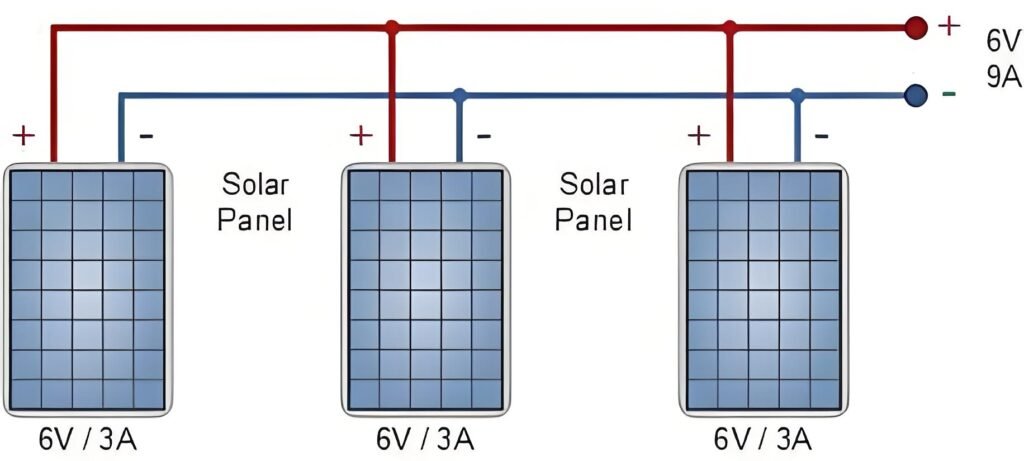
In contrast, a parallel configuration connects the positive terminals of multiple solar panels together, as well as the negative terminals. This arrangement increases the output current while keeping the voltage constant. For instance, if three panels each output 5A of current, connecting them in parallel will result in a total output current of 15A, while the voltage remains at the level of a single panel. This configuration is ideal for applications that require higher currents, such as high-power devices and battery charging.
Choosing the Right Configuration
The choice between series and parallel configurations depends on your specific requirements:
- Voltage Requirements: If your application needs higher voltage, a series configuration is more appropriate.
- Current Requirements: If you require higher current, a parallel configuration will be more effective.
It is also worth noting that in practical applications, series and parallel configurations can be combined to maximize system performance. Therefore, when designing a solar panel system, it is essential to consider your energy needs, device compatibility, and the specific environment in which you will be operating. By selecting the right configuration, you can fully leverage the economic and environmental benefits of solar energy.
Key Terminology Explained

- Voltage
Voltage refers to the potential difference (charge difference) between two points, usually measured in volts (V). It serves as the driving force that propels current to flow, determining the ability of electrons to move within a circuit. - Current
Current is the rate at which electric charge flows through a circuit, typically measured in amperes (A). The magnitude of current reflects the amount of charge passing through a point in a given time and can be described as either direct current (DC) or alternating current (AC). - Ampere
The ampere is the unit used to measure electric current, defined as the flow of one coulomb of charge per second. It is one of the fundamental units in the International System of Units (SI). - Output Voltage
Output voltage is the voltage supplied to a load by a power source (such as a generator or voltage regulator). It determines the operational state and efficiency of the load. - Output Current
Output current refers to the maximum current that a power source can provide to a load. It is a critical parameter for assessing the capability of the power source and the requirements of the load, directly impacting system performance and stability.
Enhancing Understanding
Grasping these key terms not only helps you understand the basic concepts of electrical engineering but also provides theoretical support when designing and optimizing electrical systems. These terms are interrelated and collectively influence the efficiency and reliability of power systems. Mastering them can aid you in making more precise decisions in practical applications.
Let us help you understand how to properly connect solar panels in series or parallel, so you can select the method that best suits your needs!
How to Connect Solar Panels
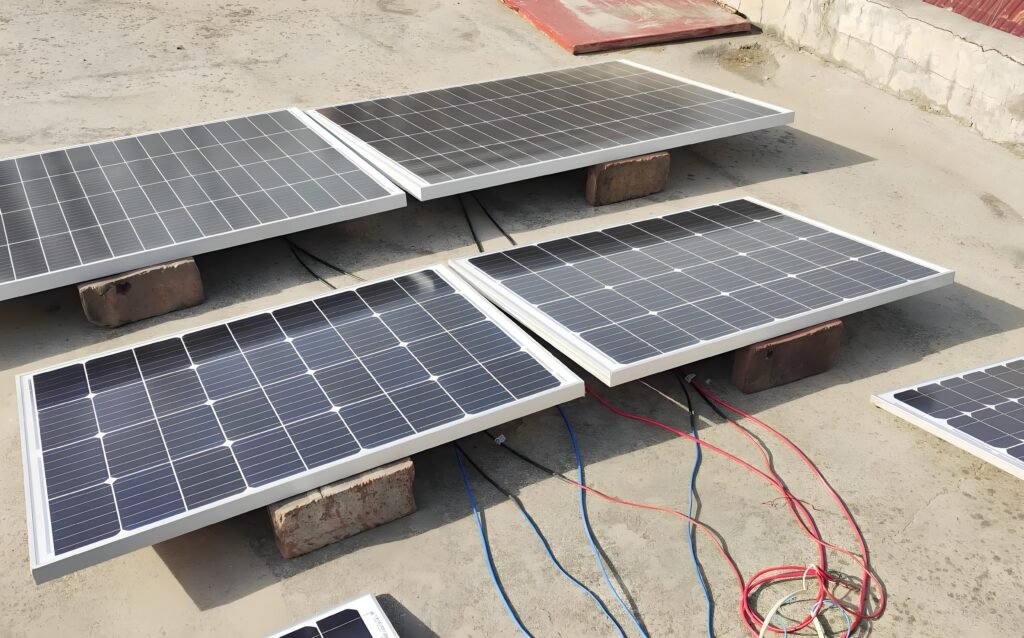
When connecting solar panels, two key parameters must be considered: voltage and current. Each solar power system has defined minimum and maximum capacity limits, which significantly influence the way the panels should be connected.
Different solar panels may have varying voltage and current ratings. It is crucial to connect the panels in a manner that balances the solar system, maximizing energy input without exceeding the capacity of the generator or power station. Typically, multiple solar panels are linked to a single generator, and the way these panels are connected (whether in series or parallel) will directly affect the efficiency of energy capture and storage.
Series Configuration
In a series configuration, multiple solar panels are connected end-to-end, increasing the overall voltage while keeping the current constant. This method is suitable for applications that require higher voltage levels, such as long-distance power transmission. However, it is essential to ensure that all panels in the series have similar electrical characteristics to avoid efficiency losses.
Parallel Configuration
In contrast, a parallel configuration allows for an increase in overall current while maintaining the same voltage. This setup is particularly effective for applications that demand higher current output, such as charging batteries or powering high-demand devices. Ensuring compatibility among the panels is equally important for achieving optimal performance.
Optimizing Your Solar System
Effectively optimizing your solar system involves not only selecting the right configuration but also considering the specifications of each panel and their impact on overall performance. By gaining a deeper understanding of the characteristics of solar panels and their interactions when connected, you can significantly enhance energy capture and storage efficiency, leading to a more effective solar energy solution.
Understanding Series Solar Panels and How They Operate

Series solar panels are connected end-to-end to form a unified circuit, thereby increasing the system's voltage output. In this configuration, the positive terminal of one panel connects to the negative terminal of the next, resulting in a total system voltage equal to the sum of the voltages of each panel. For instance, if you have five panels, each rated at 12 volts, the total voltage would be 60 volts.
In a series connection, the current remains the same as that of a single panel. This setup is particularly suitable for applications requiring higher voltages, such as grid-tied systems, as it enhances the efficiency of power transmission. Series configurations are especially effective in environments with minimal shading and for systems that require low current levels.
Advantages of Series Configuration
- Increased Voltage: Series connections significantly boost the system voltage, making them ideal for high-voltage applications.
- Simplified System Design: The wiring is straightforward, reducing installation complexity and costs.
- Reduced Energy Loss: Higher voltages can minimize energy losses during long-distance transmission, improving overall system efficiency.
How It Works
In a series configuration, current flows through each solar panel, and each panel contributes its rated voltage. When combined, the system can deliver a higher voltage suitable for powering high-voltage devices, such as connecting to the urban grid or large-scale power distribution.
Design Considerations
When designing a series system, it is crucial to ensure that all panels have similar electrical characteristics, including voltage and current output capacities. Mismatched panels can lead to performance issues, particularly if one panel experiences shading or failure; this can negatively impact the entire system's output. This phenomenon is known as "voltage drop," which, in practice, may cause some panels to underperform or fail entirely.
Series solar panel configurations offer numerous advantages in specific scenarios, particularly when high voltage is required. By implementing thoughtful design and layout, a series system can maximize solar energy utilization, providing users with a stable and efficient power supply.
Series vs. Parallel Solar Panels: A Comprehensive Analysis of Advantages and Disadvantages
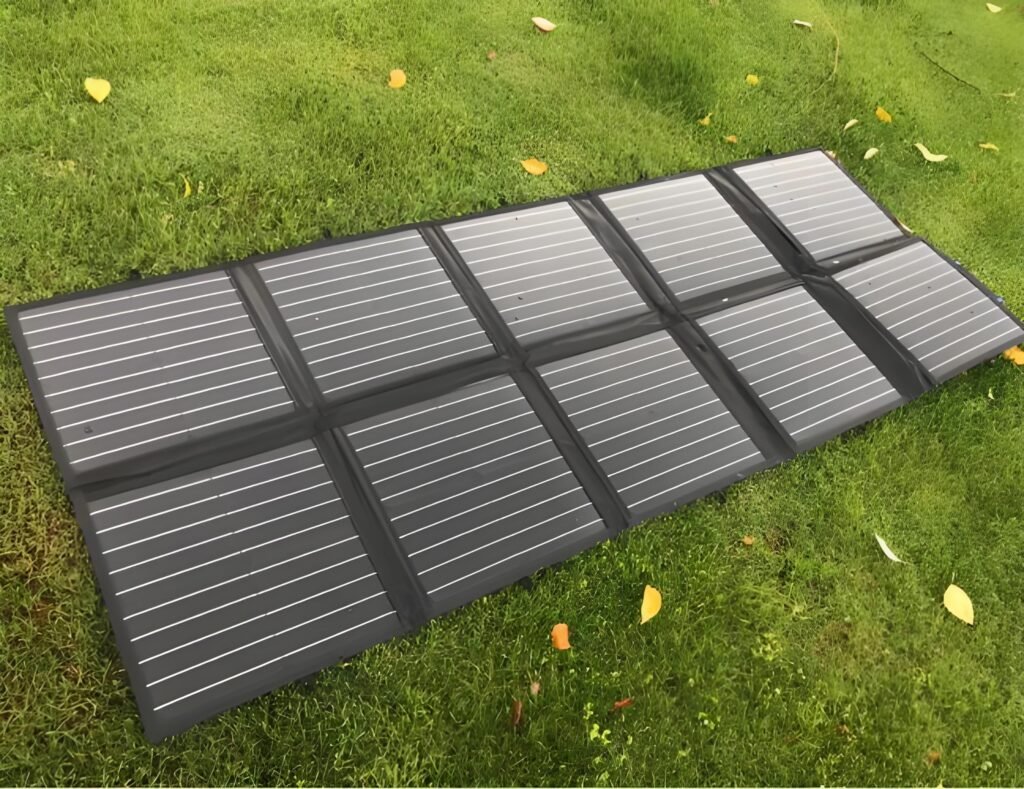
When selecting a connection method for solar panels, understanding the advantages and disadvantages of series and parallel configurations is essential for optimizing system performance. This decision involves multiple factors, including voltage and current requirements, power output, available space, and compatibility between panels.
Advantages and Disadvantages of Series Connections
Advantages:
- Increased Voltage and Power Output:
- Series connections significantly raise the system voltage. For example, five 12-volt panels connected in series can achieve a total voltage of 60 volts. This is crucial for devices that require higher voltage, allowing for faster charging and improved energy storage efficiency, particularly suitable for large-scale power generation or grid-tied systems.
- Reduced Current Flow:
- In a series configuration, the total current remains at the level of a single panel, allowing for smaller cable specifications and thereby reducing material costs. This low current characteristic minimizes resistive losses, making the system more efficient during long-distance transmission.
- Lower Transmission Losses:
- The higher voltage in a series setup helps to reduce power losses that can occur due to excessive current. This enhances overall system efficiency, ensuring that more energy reaches the end devices during long-distance transmission.
- Improved Performance in Low Light:
- In unobstructed environments, series connections can maintain good efficiency even under low light conditions. The interconnected panels are better equipped to utilize weak sunlight, thereby enhancing overall energy generation.
Disadvantages:
- Performance Limitations:
- The overall output efficiency of a series system is dictated by the weakest panel in the chain. If one panel experiences shading, damage, or reduced performance, the entire series system's power output will be adversely affected. This can lead to significant drops in system efficiency, compromising energy supply stability.
- High Inverter Requirements:
- Series systems require inverters that can withstand high voltage to accommodate the increased system voltage. This not only raises initial investment costs but can also complicate system design and maintenance.
- Wiring Complexity:
- While the connections in a series configuration are relatively straightforward, managing wiring in large systems can still pose challenges. Ensuring safe and reliable connections between multiple panels is essential for overall system integrity.
When deciding between series and parallel connections for solar panels, it is crucial to consider the strengths and weaknesses of each configuration comprehensively. Series connections excel in applications requiring high voltage and low current, but careful attention must be paid to their impact on overall system performance and equipment requirements. A thorough understanding of these factors will assist you in making more informed decisions, ultimately optimizing the efficiency and reliability of your solar energy system.
Series vs. Parallel Solar Panels: Which is Better?
Now that we understand the differences between series and parallel solar panels, the question arises: how do we choose the right configuration? The answer largely depends on your specific application and environmental conditions.
When to Choose Series Configuration
If your solar panels are predominantly situated in unobstructed areas, a series configuration is generally the preferred option. The primary reason for this is that a series-connected solar system tends to be more efficient, particularly during the early morning, late afternoon, and on overcast days.
- Voltage Requirement: Series connections effectively increase the system voltage, which is beneficial for charging batteries, as they often require higher voltages than what a single panel can provide. This heightened voltage can enhance the overall performance of the solar system, ensuring that energy is harvested effectively throughout the day.
- Performance in Variable Conditions: With a series configuration, the system can better manage fluctuations in sunlight. As the voltage rises, the system can still function efficiently even in low-light situations, ensuring that energy generation is maximized.
When to Choose Parallel Configuration
On the other hand, parallel solar panels are not necessarily a poor choice. If you opt for a series configuration for your solar system, it’s essential to consider the need for a Maximum Power Point Tracking (MPPT) charge controller, which can often be more expensive. For small, low-voltage systems, parallel connections may provide a more cost-effective solution.
- Low Voltage Applications: If you are working with applications like RVs, boats for lighting, or other simple low-voltage electrical setups, a parallel configuration is an ideal choice. This setup allows you to combine multiple panels while maintaining the same voltage, which can be particularly advantageous for low-power needs.
- Cost-Effective Charging: Parallel systems can use less expensive Pulse Width Modulation (PWM) charge controllers, helping to keep your budget in check. This can be especially beneficial for users looking to minimize initial costs while still meeting their energy needs.
In conclusion, whether to use series or parallel solar panels depends on your specific energy requirements and application scenarios. Series configurations excel in high-voltage applications where efficiency and performance are critical, especially in unobstructed environments. Conversely, parallel configurations provide flexibility and cost-effectiveness for low-voltage applications, making them suitable for various portable and recreational uses.
Carefully evaluating your needs, environmental conditions, and budget constraints will help you make an informed decision, ensuring that your solar energy system operates at peak efficiency and meets your expectations.
Series and Parallel Solar Panels: Understanding Voltage and Current

Voltage is a measure of electric potential or force, while amperes (amps) are the units used to measure current. A simple analogy to understand their relationship is to think of voltage as the water pressure pushing through a pipe, while amperage represents the rate of water flow through that pipe.
Voltage and Current in Series Connections
When solar panels are connected in series, the voltage from each panel adds up. This means that the total output voltage of the system increases, while the current remains at the level of the panel with the lowest output. To illustrate this, imagine a series of water pipes: while the potential pressure increases (analogous to voltage), the actual flow rate (analogous to current) does not change and is limited by the smallest pipe in the series.
- Total Voltage Calculation: For example, if you have five 12-volt panels connected in series, the total system voltage would be 60 volts. This higher voltage is advantageous for applications requiring significant energy transfer over longer distances, reducing resistive losses along the way.
- Current Limitation: The current output in a series system will be equal to the current output of the weakest panel. If one panel is shaded or malfunctioning, it can significantly reduce the overall system performance, analogous to a bottleneck in water flow.
Voltage and Current in Parallel Connections
In contrast, when solar panels are connected in parallel, the total current output increases while the voltage remains the same. This configuration allows for a greater flow of electricity, much like increasing the number of pipes through which water can flow without increasing the pressure.
- Current Enhancement: For instance, if you connect multiple 12-volt panels in parallel, the voltage remains at 12 volts, but the total current output is the sum of all the panels. This setup is particularly beneficial for low-voltage applications, as it allows for multiple sources of current while maintaining a consistent voltage.
- Voltage Stability: Since the voltage does not increase in a parallel configuration, it is easier to manage and integrate with low-voltage systems, making it suitable for applications such as RVs or small solar setups where lower voltage is sufficient.
System Considerations
When deciding between series and parallel configurations, it is crucial to understand the voltage and current ratings of all panels involved, as well as the requirements and limitations of the entire system. This includes components like inverters, microinverters, solar batteries, and charge controllers.
- Inverter Compatibility: Ensure that the inverter can handle the maximum voltage output in a series configuration. Conversely, for parallel setups, check that it can manage the total current output without risk of overheating or overloading.
- System Balance: Each configuration has its advantages and disadvantages regarding system efficiency and performance. Understanding how to balance these factors will help you determine the best connection method to maximize energy generation without exceeding the solar power system’s handling capacity.
By carefully evaluating your needs and the specifications of your solar panels, you can optimize the connection method to enhance energy production effectively, ensuring a reliable and efficient solar power system.
Conclusion: Key to Optimizing Solar Panel Configuration
Understanding the differences between series and parallel connections for solar panels is crucial for enhancing the overall performance of your solar energy system. Making informed choices based on your specific needs, power output requirements, and usage scenarios will directly impact the efficiency, stability, and maintainability of your system.
Applicability of Series and Parallel Configurations
- Series Configuration is better suited for applications requiring high voltage, such as large grid-tied systems. By connecting multiple solar panels in series, you can significantly increase the output voltage, reducing energy loss during long-distance transmission. This approach is particularly effective in sunny, unobstructed environments. However, a potential risk of a series system is that the poor performance of a single panel can drag down the output of the entire system, resulting in a decrease in overall efficiency.
- Parallel Configuration, on the other hand, is ideal for low-voltage or small-scale systems, such as RV power supplies or portable devices. This connection method allows multiple panels to share the load, increasing overall current output while keeping the voltage stable. Such a setup offers greater flexibility and redundancy; even if one panel is damaged, the others can continue to function, ensuring uninterrupted power supply.
Comprehensive Considerations and Best Practices
When deciding between series and parallel configurations, consider the following key factors:
- Device Requirements: Clearly understand the voltage and current demands of your devices to avoid overload or efficiency losses.
- System Design: Assess the scale and complexity of the system; larger systems typically favor series connections, while smaller systems may lean towards parallel configurations.
- Environmental Conditions: Evaluate shading and sunlight conditions at the installation site to choose a configuration that maximizes energy capture.
Sustainable Development and Future Investment
Regardless of the connection method you choose, adopting solar technology will bring long-term economic and environmental benefits. Utilizing renewable energy not only significantly reduces your carbon footprint but also enhances energy independence, providing a stable power supply.
If you have any questions about choosing between series and parallel configurations, feel free to reach out to our professional team. We will provide tailored advice to help you find the solution that best meets your needs. Whether it’s high-efficiency balcony solar panels or systems designed specifically for RVs, we ensure you have the best experience in utilizing renewable energy. Let’s work together towards a more sustainable future!